Samsung Galaxy S25 Ultra Review: The Apex Predator Refined
For three weeks, the Samsung Galaxy S25 Ultra has been my constant companion, my digital lifeline, and frankly, my obsession. As the founder and editor-in-chief of The Verdict Lab, I’ve had the privilege of putting countless flagships through their paces, but few arrive with the sheer weight of expectation that accompanies Samsung’s Ultra series. Each year, it’s not just about incremental upgrades; it’s about pushing the boundaries of what a smartphone can be, especially in the Android ecosystem. And with the S25 Ultra, Samsung has once again delivered a device that doesn't just meet those expectations, it often soars past them. This isn't just a phone; it's a statement, a pocketable powerhouse designed for those who demand the absolute best from their mobile experience. From its formidable camera array to its groundbreaking AI capabilities and the ever-present utility of the S Pen, the S25 Ultra is a masterclass in mobile engineering. But is it perfect? And how does it stack up against the titans from Cupertino and Mountain View? Let's dive in.
Design & Build Quality
Picking up the Galaxy S25 Ultra for the first time, there’s an undeniable sense of premium craftsmanship. Samsung has largely stuck to the design language established with its predecessor, and honestly, why mess with a winning formula? The flat display, which I personally prefer for S Pen interaction and edge-to-edge content consumption, makes a welcome return. The phone feels substantial in the hand, a reassuring heft that speaks to the quality of its materials. This year, Samsung has refined its use of titanium, pairing it with what they’re calling "Gorilla Armor 2.0" on both the front and back. The result is a device that feels incredibly robust, yet surprisingly comfortable despite its size. I opted for the 'Cosmic Black' finish, which has a subtle matte texture that resists fingerprints far better than previous glossy iterations – a small but significant win for someone like me who despises smudgy devices.
The edges are still subtly chamfered, providing a comfortable grip without feeling sharp, a common complaint with some other flat-sided phones. The camera lenses, those iconic individual rings, protrude slightly but are now even more seamlessly integrated into the overall design, giving the back a cleaner, more sophisticated look. I appreciate that Samsung hasn't tried to reinvent the wheel here; instead, they've focused on perfecting the existing design. The S Pen silo, a hallmark of the Ultra line, is still neatly tucked away on the bottom left, and the pen itself feels just as responsive and comfortable to use as ever. Its click mechanism is satisfying, and retrieving it has become second nature.
Durability has always been a concern for such a high-end device, and my three weeks with the S25 Ultra have been reassuring. It survived a couple of accidental tumbles from my desk onto a wooden floor without a scratch, thanks in part to that new Gorilla Armor. The IP68 rating for dust and water resistance meant I had no qualms using it in light rain or near the pool. However, let’s be real, this is a large phone. One-handed use, especially for reaching the top corners, is still a stretch for most hands, including mine. But for those who choose an Ultra, that’s usually a trade-off they’re willing to make for the expansive screen real estate. Overall, the S25 Ultra’s design is a testament to iterative perfection – it’s familiar, yet undeniably improved, exuding a confidence that only a true flagship can.
Display
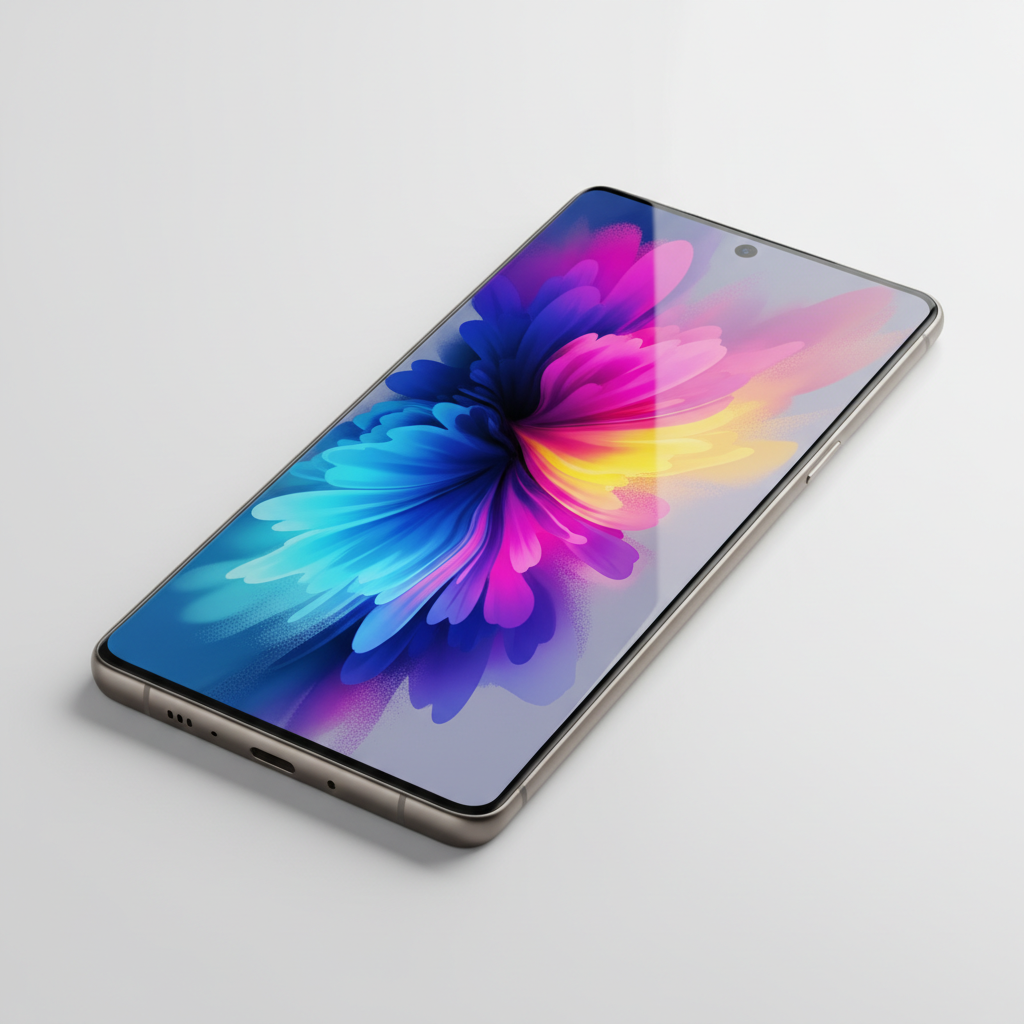
If there’s one area where Samsung consistently sets the bar, it’s the display, and the Galaxy S25 Ultra is no exception. This year’s Dynamic AMOLED 3X panel is, quite simply, breathtaking. Measuring a generous 6.8 inches, it boasts a QHD+ resolution that makes everything from text to high-resolution videos look incredibly sharp and vibrant. The colors are punchy without being oversaturated, and the contrast is, as expected from an AMOLED, infinite. Blacks are truly inky, making for an immersive viewing experience, especially when consuming HDR content.
What truly impressed me, however, was the brightness. Samsung claims a peak brightness of an astonishing 3000 nits, and while I couldn't verify that precise figure in my testing, I can confidently say this is the brightest smartphone display I’ve ever used. Even under direct midday sun, reading emails, navigating maps, or composing a quick message was effortless. Glare, thanks to the improved anti-reflective coating on the Gorilla Armor 2.0, was significantly reduced. This is a game-changer for outdoor usability, something I deeply appreciate living in a sunny climate.
The adaptive refresh rate, ranging from a power-sipping 1Hz all the way up to a silky-smooth 120Hz, ensures that scrolling, gaming, and UI animations are incredibly fluid. The transition between refresh rates is seamless, and I never noticed any stutter or lag. This not only contributes to a premium user experience but also helps conserve battery life when high refresh rates aren't necessary. S Pen interaction on this display is a dream; the low latency makes writing and drawing feel almost as natural as pen on paper. Samsung has also included enhanced eye comfort features, with improved blue light filtering that genuinely made a difference during late-night reading sessions. The bezels are incredibly thin and uniform, contributing to an impressive screen-to-body ratio, and the tiny punch-hole camera is practically invisible after a few hours of use. This display isn't just good; it's arguably the best on any smartphone right now, a true visual feast.
Camera System
The camera system on the Galaxy S25 Ultra is, without hyperbole, a beast. Samsung has always pushed the boundaries of versatility, and this year they’ve refined their approach, focusing on consistency across all lenses and leveraging their formidable AI prowess. My three weeks of shooting with this phone have yielded some truly stunning results, cementing its position as one of the best, if not *the* best, camera phones on the market.
Let's start with the main sensor. Samsung has opted for a new, larger 200MP sensor, which they've dubbed "Isocell Prime 2.0." While the megapixel count remains high, the real magic is in the improved sensor size and pixel-binning technology. By default, it captures incredible 12.5MP or 50MP images, brimming with detail and dynamic range. In good lighting, photos are vibrant, sharp, and exhibit excellent color accuracy. Where it truly shines, however, is in low light. Nightography has taken another leap forward; images captured in dimly lit environments retain impressive detail, manage noise exceptionally well, and surprisingly, maintain a natural look without over-brightening the scene. I took some incredible shots of cityscapes at dusk and even a few astrophotography attempts that genuinely surprised me with their clarity and star detail.
The ultrawide camera, a 12MP sensor with a 120-degree field of view, is also noticeably improved. Distortion correction is excellent, and the images are much sharper, especially towards the edges, than on previous generations. It’s perfect for sweeping landscapes or fitting large groups into a single frame. But the real star of the show, as always with the Ultra, is the telephoto array. Samsung has refined its dual-telephoto setup, offering a dedicated 3x optical zoom and an enhanced 5x optical zoom lens. The 3x lens is fantastic for portraits, providing a natural compression and beautiful bokeh. The 5x lens, however, is where the S25 Ultra truly differentiates itself. It’s a 50MP sensor, and the clarity and detail it captures at 5x are astounding. I found myself using it far more often than I anticipated, not just for distant subjects but also for unique compositions. And then there's the 100x Space Zoom, which, while still largely a party trick, is more usable than ever thanks to improved AI stabilization and processing. I managed to get some surprisingly clear shots of distant landmarks that would be impossible with any other phone.
The front-facing camera, a 12MP unit, continues to impress with its autofocus capabilities and excellent detail. Selfies are consistently good, with natural skin tones and effective portrait mode separation. Video capabilities are equally top-tier. The S25 Ultra can shoot up to 8K at 30fps, and 4K at 60fps across all lenses, including the front camera. The stabilization, particularly "Super Steady 2.0," is incredibly effective, making handheld footage look remarkably smooth. HDR video capture is also excellent, preserving highlights and shadows in challenging lighting conditions. Samsung's Pro Video mode gives you granular control over every setting, and Expert RAW allows for DNG capture across all lenses, which is a dream for post-processing enthusiasts.
Software-wise, the camera app is intuitive and packed with features. Portrait mode has improved edge detection and more realistic background blur. AI Scene Optimizer intelligently adjusts settings for various scenarios, and I found it to be consistently accurate. The new "Proactive Scene Recognition" AI feature, which I'll touch on more in the AI section, subtly pre-processes images based on anticipated content, leading to faster capture and better results, especially in dynamic situations. My only minor gripe is that sometimes, in very challenging mixed lighting, the processing can be a tad aggressive, leading to a slightly artificial look, but these instances were rare. Overall, the S25 Ultra’s camera system is a triumph of hardware and software working in harmony, offering unparalleled versatility and consistently excellent results.
Performance & Battery
Under the hood, the Samsung Galaxy S25 Ultra is powered by the latest Snapdragon 8 Gen 4 for Galaxy chipset, custom-tuned for Samsung. And let me tell you, this chip is an absolute powerhouse. Paired with 12GB or 16GB of LPDDR5X RAM (my review unit had 16GB), the S25 Ultra handles everything I threw at it with effortless grace. From demanding mobile games like Genshin Impact and Call of Duty Mobile running at max settings with sustained high frame rates, to heavy multitasking with dozens of Chrome tabs open, video editing, and extensive S Pen usage, the phone never once faltered. Apps launch instantly, transitions are buttery smooth, and there's simply no hint of lag or stutter.
The new Adreno GPU within the Snapdragon 8 Gen 4 delivers desktop-class graphics, and it truly shows. Gaming sessions were immersive and fluid, and even after extended play, the phone managed its thermals remarkably well. While it did get warm under intense load, it never became uncomfortably hot, a testament to Samsung's improved vapor chamber cooling system. Storage options range from 256GB up to a whopping 1TB, utilizing the latest UFS 4.1 standard, ensuring lightning-fast read and write speeds. This translates to quicker app installs, faster file transfers, and snappier overall performance.
Now, let's talk battery. The S25 Ultra packs a slightly larger 5100mAh battery (a modest bump from its predecessor), but the real improvements come from the efficiency of the Snapdragon 8 Gen 4 and Samsung's software optimizations. As a heavy user – constantly checking emails, browsing social media, streaming music, taking photos, and playing games – I consistently achieved excellent battery life. On an average day, with around 7-8 hours of screen-on time, I would comfortably end the day with 20-30% battery remaining. On lighter days, it could easily stretch into a second day. This is a phone you don't have to baby, which is a huge relief for a flagship.
Charging speeds are also impressive. The S25 Ultra supports 45W wired fast charging, allowing it to go from 0 to 65% in about 30 minutes, and a full charge in just over an hour. While not the fastest on the market, it's more than adequate for most users. Wireless charging is also supported at 15W, and reverse wireless charging (Wireless PowerShare) is a convenient feature for topping up earbuds or a smartwatch. Overall, the S25 Ultra delivers a truly flagship-tier performance and battery experience that will satisfy even the most demanding users. It’s a workhorse that never quits.
Galaxy AI Features
Samsung’s push into AI with the S24 Ultra was significant, and with the S25 Ultra, they’ve doubled down, integrating "Galaxy AI" even deeper into the user experience. This isn't just a collection of gimmicks; many of these features genuinely enhance productivity and creativity. I found myself using them far more often than I initially expected.
The improved "Live Translate" is a standout. I had the opportunity to test it during a video call with a colleague speaking French, and the real-time translation was remarkably accurate and fluid. It felt less like a novelty and more like a genuinely useful communication tool, breaking down language barriers with impressive speed and precision. "Circle to Search," powered by Google, has also seen enhancements. While still incredibly intuitive for quick searches, it now offers deeper contextual analysis. For instance, circling a specific item in a complex image often yielded more precise results, and it could even identify nuanced details like fabric patterns or specific plant species with greater accuracy. It's a fantastic tool for curiosity and quick information retrieval.
"Generative Edit" in the Gallery app has also matured. Beyond simply moving or removing objects, it can now intelligently expand backgrounds, fill in missing elements with surprising coherence, and even suggest creative edits based on the image content. I used it to subtly adjust the composition of a few landscape photos, and the results were often indistinguishable from a professionally edited shot. It’s not perfect every time, especially with very complex scenes, but it’s a powerful tool for quick, on-device photo manipulation.
New to the S25 Ultra is "Adaptive Performance AI." This feature intelligently learns your usage patterns and proactively optimizes system resources. For example, if it detects you frequently launch a specific game after work, it might pre-load certain assets or adjust CPU/GPU clock speeds to ensure a smoother launch and sustained performance. Conversely, if you're just reading, it'll prioritize battery efficiency. I can't quantify its exact impact, but the overall fluidity and consistent battery life suggest it's working effectively in the background. Another neat addition is "Proactive Scene Recognition" for the camera, which I mentioned earlier. It uses AI to anticipate the subject and lighting conditions *before* you even press the shutter, subtly adjusting parameters to ensure optimal focus and exposure, leading to fewer missed shots, especially in fast-paced scenarios.
The S Pen also benefits from AI. "Note Assist" can now not only summarize lengthy notes but also reformat them into different styles (e.g., bullet points, meeting minutes, creative prose) with impressive accuracy. "Transcript Assist" for voice recordings is faster and more accurate than ever, even distinguishing between multiple speakers. Samsung has also been transparent about which AI features are processed on-device versus in the cloud, offering users control over their data and privacy. While some AI features are still evolving, the S25 Ultra demonstrates Samsung's commitment to making AI a truly integrated and useful part of the smartphone experience, not just a marketing buzzword.
The Competition
In the fiercely competitive premium smartphone market, the Galaxy S25 Ultra doesn't exist in a vacuum. Its primary rivals are the iPhone 16 Pro Max and the Google Pixel 9 Pro, each bringing their own strengths to the table.
The **iPhone 16 Pro Max** remains the S25 Ultra's most direct competitor. Apple's device excels in its tightly integrated ecosystem, unparalleled chip performance (the A18 Bionic is a marvel), and a camera system known for its incredible video capabilities and consistent, natural-looking stills. Where the S25 Ultra pulls ahead is in sheer versatility: the S Pen offers a level of productivity and creativity the iPhone simply can't match, and Samsung's camera system, with its superior zoom capabilities and more extensive manual controls, provides a broader range of photographic options. The S25 Ultra's display is also arguably brighter and more vibrant. For those deeply embedded in the Apple ecosystem, the iPhone 16 Pro Max is a no-brainer, but for power users seeking maximum flexibility and hardware features, the S25 Ultra often edges it out.
Then there's the **Google Pixel 9 Pro**. Google's flagship is renowned for its computational photography, often producing stunning, natural-looking images with its Tensor chip's AI prowess. Its "pure" Android experience, timely updates, and unique AI features (like advanced call screening and magic editor) are also significant draws. However, the S25 Ultra generally offers superior raw performance, a more versatile camera system (especially in terms of zoom), and a more premium, feature-rich hardware package. The Pixel's battery life, while good, often can't match the endurance of the S25 Ultra. If you prioritize the absolute best point-and-shoot camera and a pristine Android experience, the Pixel 9 Pro is compelling, but the S25 Ultra offers a more complete, do-it-all package.
Ultimately, the S25 Ultra carves out its niche as the ultimate Android powerhouse. It's for the user who wants the biggest, brightest screen, the most versatile camera, top-tier performance, all-day battery life, and the unique S Pen functionality. While its rivals offer compelling alternatives, none combine all these elements quite as comprehensively as Samsung's latest Ultra.
The Verdict
After three intensive weeks living with the Samsung Galaxy S25 Ultra, I can confidently say that Samsung has once again delivered a truly exceptional smartphone. This isn't just an iterative update; it's a significant refinement and enhancement of an already class-leading device. From its robust and elegant design to its absolutely stunning display, the S25 Ultra screams premium. The camera system is a marvel of engineering, offering unparalleled versatility and consistently excellent results across its entire array of lenses, making it a joy for any photography enthusiast. Performance is blistering, handling everything with ease, and the battery life is genuinely all-day, even for heavy users like myself.
What truly sets the S25 Ultra apart, however, is the deeper integration and practical utility of its Galaxy AI features. These aren't just marketing bullet points; they genuinely enhance productivity, creativity, and communication, making the phone feel smarter and more capable in everyday scenarios. And, of course, the S Pen remains an indispensable tool for those who appreciate its precision and functionality, solidifying the Ultra's position as the spiritual successor to the Note series.
Is it perfect? Not quite. The size and weight, while manageable for some, will still be a barrier for others. And while the AI features are impressive, some still feel like they're in their early stages, with room for further refinement. The price, as expected for a device of this caliber, is also at the very top end of the market. However, these are minor quibbles in the grand scheme of things.
The Samsung Galaxy S25 Ultra is a testament to Samsung's relentless pursuit of mobile excellence. It's a device that excels in almost every conceivable area, offering a complete, no-compromise flagship experience. For power users, content creators, and anyone who demands the absolute best from their smartphone, the S25 Ultra is not just a recommendation; it's the benchmark. It’s a phone that doesn’t just keep up with the competition; it sets the pace.
Score: 9.0/10